

Dust extraction prices
Published list prices cover dust extractors and ducting matched to router table size, spindle power and the material being cut. If your workshop needs a bank-ready figure with add-ons and delivery, we turn the list price into a written quote from Pinetown.
| Configuration | Typical machine match | Ducting included | Motor / airflow class |
|---|---|---|---|
| Single-bag extractor with starter duct kit | Small router up to 1 300 x 2 500 mm, light board cutting | 5 m with one machine connection | 2.2 kW class, entry airflow |
| Twin-bag extractor with larger inlet set | Router 1 300 x 2 500 mm, MDF and plywood duty | 6 m with standard bends and hood connection | 3.0 kW class, medium airflow |
| Cartridge-filter extractor package | Router 1 300 x 2 500 mm with finer dust load | 6 m with upgraded filter arrangement | 4.0 kW class, medium to high airflow |
| High-airflow extractor with bin collection | Full-size router 1 500 x 3 000 mm, cabinet work | 8 m with wider main duct and fittings | 5.5 kW class, high airflow |
| Branched extractor package for router plus second point | Router with one additional woodworking machine | 10 m with branch section and isolation gate | 5.5 kW class, high airflow |
| Heavy-duty cartridge system with larger duct diameter | ATC router or high-throughput nesting line | 10 m with larger main run and machine drop | 7.5 kW class, high airflow |
| Cyclone-assisted extractor package | Production router cutting MDF most of the week | 12 m with cyclone stage and bin set | 7.5 kW class, high airflow plus pre-separation |
| Central extraction starter system | Large workshop with one router and multiple drops | 15 m with trunk line and three branch points | 11 kW class, workshop system |
Prices on request, ex VAT and ex delivery. Ask for a quote.
What the listed extractor setups include
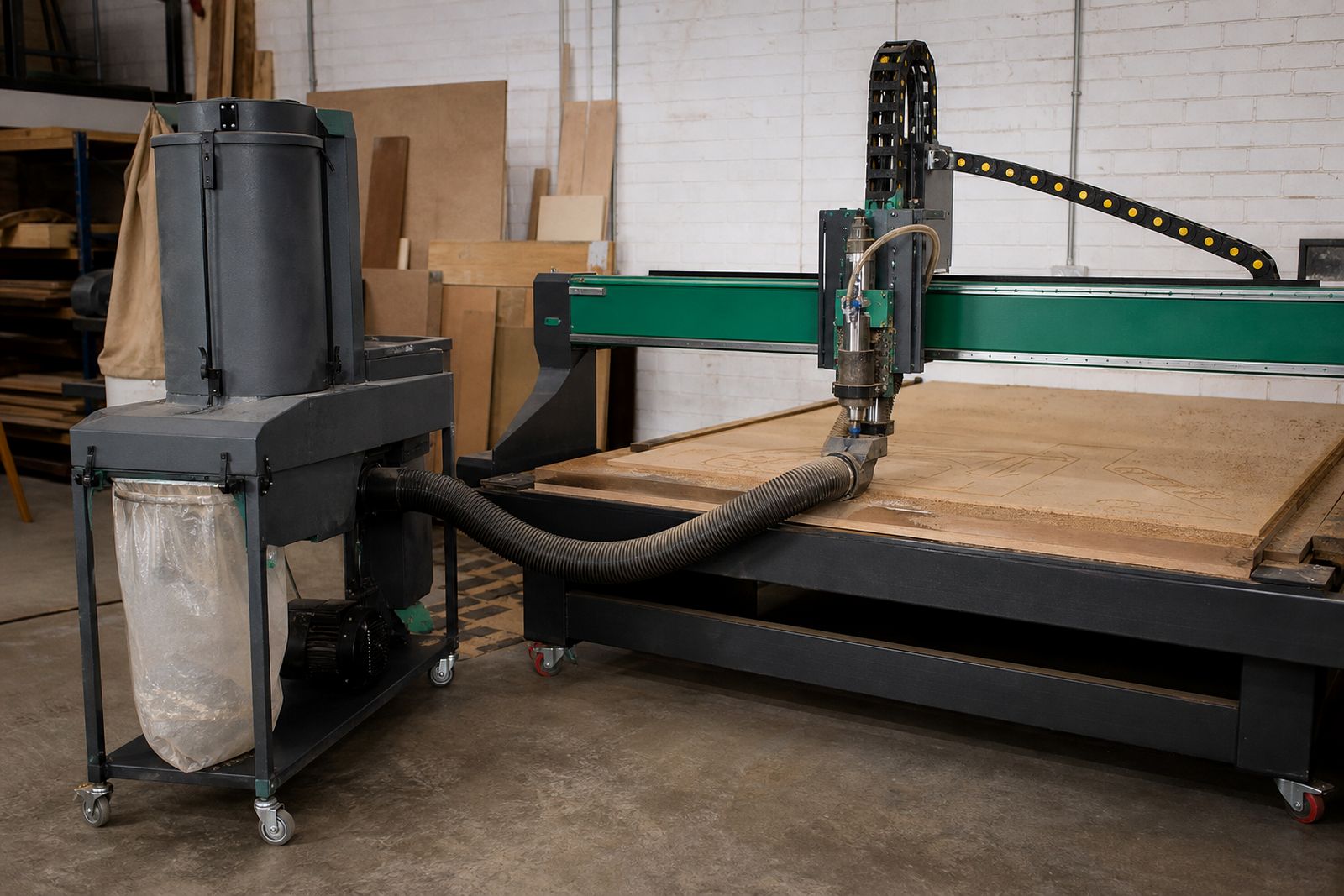
Each row in the table is a starting configuration, not a bare motor price. The listed amount normally covers the extractor unit, collection method, a practical starter length of ducting, standard bends, machine connection pieces and the basic electrical arrangement for that size. For router work we match the extractor to the spindle class and the kind of chip load expected from board cutting, solid timber nesting or heavier surfacing passes.
On smaller tables the package is usually built around one main pickup line. Larger beds and faster feed rates often need wider ducting and a stronger airflow reserve so the cutter stays visible and the spoil area does not pack up with chips. Fine MDF dust behaves differently from acrylic swarf or plywood chips, so the row that looks cheaper at first glance is not always the right fit.
- Extractor unit sized for the machine duty
- Starter ducting and standard fittings
- Machine connection point for router or woodworking machine
- Collection arrangement suitable for dry workshop waste
What moves the price up or down
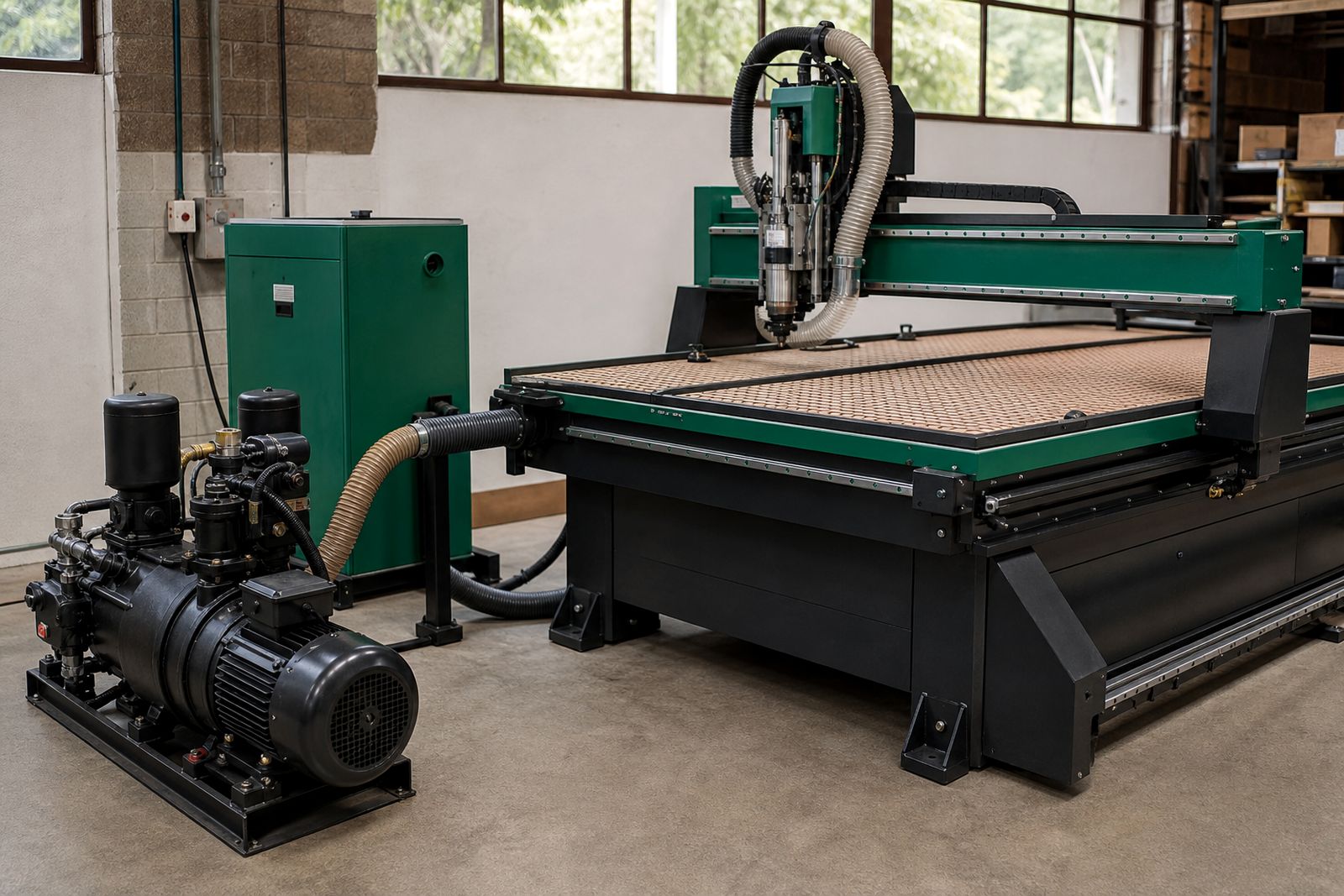
The biggest price changes come from airflow volume, duct diameter and how far the run must travel through the workshop. A short straight run costs less than a line with several branches and ceiling turns. If your router has a vacuum bed and cuts full sheets all day, the extraction side usually needs more capacity than a part-time machine cutting only signs or plastic sheet.
Spindle size matters as well. A higher power spindle often runs larger cutters and throws a heavier stream of waste, especially on melamine faced board. Collection bin style, filter area and whether you need one machine point or two also affect the figure. In coastal KwaZulu-Natal, humidity and fine MDF dust can make filter choice a bit more important than people expect.
How to compare the rows properly
Start with your machine footprint and the sheet size you cut most often. Then compare the duct diameter, fan class and the Rand amount together. The right inlet size and airflow reserve matter on a full-size nesting router, because extraction affects cut visibility, edge finish and workshop cleanliness.
- Check the intended table size, such as 1 300 x 2 500 mm or 1 500 x 3 000 mm
- Read the duct size alongside the motor power
- Look at whether the row suits chips, fine dust, or mixed duty
- Match the setup to one machine point or a small branched system
If two rows seem close, the written quote is where we separate them properly. We can note the machine type, material mix and workshop layout so you are not trying to compare unlike systems from memory.
Add-ons that are often needed
Most buyers add more than the base extractor package. The usual extras are longer duct runs, additional bends, blast gates, floor sweep points, drop sections to a second machine and larger collection capacity. Router owners also often add a better hood arrangement at the spindle if the machine was first priced with only a basic connection point.
For woodworking shops with panel saws, edge finishing equipment or sanding stations, one extractor can sometimes serve more than one point, but the branch layout must be priced correctly. That is where the list price helps as a benchmark, then the written quote carries the exact accessories and metre counts.
- Extra ducting metres beyond the starter allowance
- Additional machine drops or branch pieces
- Larger bins or bag sets for higher waste volume
- Isolation gates and extra connection hardware
From list price to a written quote
The published table gives you a stable reference for budgeting and finance planning. When you need a quote to present internally or take to the bank, we convert the chosen row into a written figure that reflects your machine model, duct length, delivery town and any extras such as tooling-side collection points or a vacuum bed layout that changes hose routing.
Send the machine size, spindle power, material you cut most, and the town where the equipment will be installed through our contact form. If you already know the approximate duct run in metres and ceiling height, include that too. The quote can then show the extractor package clearly instead of leaving the dust side as a rough allowance.
Workshop types we price for
Cabinet makers, shopfitters and general board-processing workshops in KwaZulu-Natal often use this price list, and the same list is useful for buyers elsewhere in South Africa. A small sign shop cutting PVC foam board needs a different extraction approach from a production cabinet line running MDF and particle board all week, and the table below is arranged to make that gap visible.
We do not publish one-off clearance figures or ex-demo specials here. These are standing list prices for normal configurations, so you can compare rows sensibly before asking for the written version.
What our CNC Router Quote customers say
Verified Google reviews
Questions we get asked
Does the list price include installation?
The table is for extractor configurations and standard included components only. Installation, longer site ducting runs and any special electrical work are added on the written quote where needed.
Can one extractor serve a CNC router and another machine?
Sometimes yes, provided the airflow, duct size and branch layout are sized for both duties. That needs to be shown on the written quote so the system is not underdone.
What should I send for an extraction quote?
Send the machine type, bed size, spindle power, main materials, your town and any known duct length through our contact form. A simple workshop sketch helps if the run has several turns.
Tell us about the job
Send sizes, materials and where you are through our contact form, and we will come back with the practical options.
Open the contact form