

Shopfitting router prices
These list prices focus on nesting routers used for melamine, MDF and other shopfitting panels. The rows are set out so a cabinet maker or fit-out workshop can compare bed size, drive layout and hold-down before asking for a written quote.
| Configuration | Bed size | Drive and spindle | Vacuum arrangement |
|---|---|---|---|
| Entry nesting router | 1 220 x 2 440 mm | Stepper drive, 4.5 kW spindle | T-slot table, vacuum optional |
| Panel router with vacuum table | 1 220 x 2 440 mm | Stepper drive, 6.0 kW spindle | 4-zone vacuum table |
| Shopfitting production router | 1 220 x 2 440 mm | Servo drive, 6.0 kW spindle | 4-zone vacuum table |
| Oversize board router | 1 500 x 3 000 mm | Servo drive, 6.0 kW spindle | 6-zone vacuum table |
| Nested-base router with drill head | 1 220 x 2 440 mm | Servo drive, 6.0 kW spindle | 4-zone vacuum table |
| Automatic tool-change nesting router | 1 220 x 2 440 mm | Servo drive, 9.0 kW ATC spindle | 4-zone vacuum table |
| Large-format ATC shopfitting router | 1 500 x 3 000 mm | Servo drive, 9.0 kW ATC spindle | 6-zone vacuum table |
| Heavy production nesting router | 2 100 x 3 000 mm | Servo drive, 9.0 kW ATC spindle | 8-zone vacuum table |
Prices on request, ex VAT and ex delivery. Ask for a quote.
Panels first, machine second
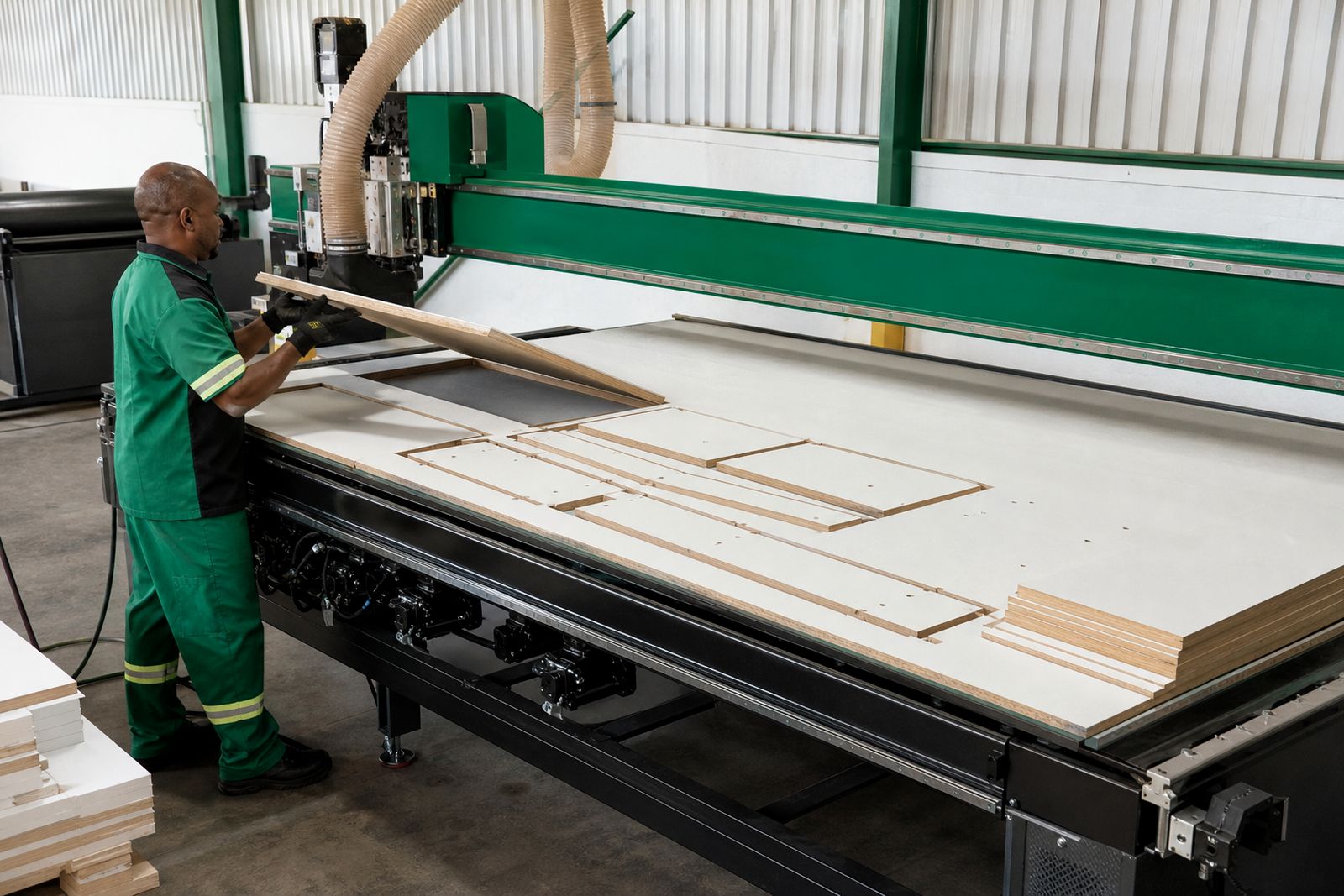
Shopfitting work usually starts with sheet yield, edge quality and how steadily the board stays down through a full nested cut. Practical production choices such as bed size, vacuum strength and tool-change layout matter more than sales labels. A small counter and kiosk shop may only need a compact table for cut-to-size, hinge cup drilling and simple pocketing, while a busier factory may need a longer bed, stronger vacuum and shorter tool-change interruptions for full-day panel work.
These list prices are for standard router configurations suited to melamine faced board, MDF, chipboard and similar sheet material used in cupboards, counters, wall units and retail fittings across KwaZulu-Natal and the rest of South Africa.
What each listed router includes
Each row represents a complete base machine configuration, with no stripped shell. The exact contents differ by size and layout, but the listed machine normally includes the frame, gantry, motion system, spindle, controller, basic operating software and a standard tool clamp set for starting production. Where a vacuum table is shown, the pumps are listed separately. The row will state if they are included.
- Bed size matched to common board handling patterns.
- Router spindle sized for panel nesting and trimming work.
- Controller package for standard 3-axis cutting files.
- Home switches, cabling and normal machine electrics.
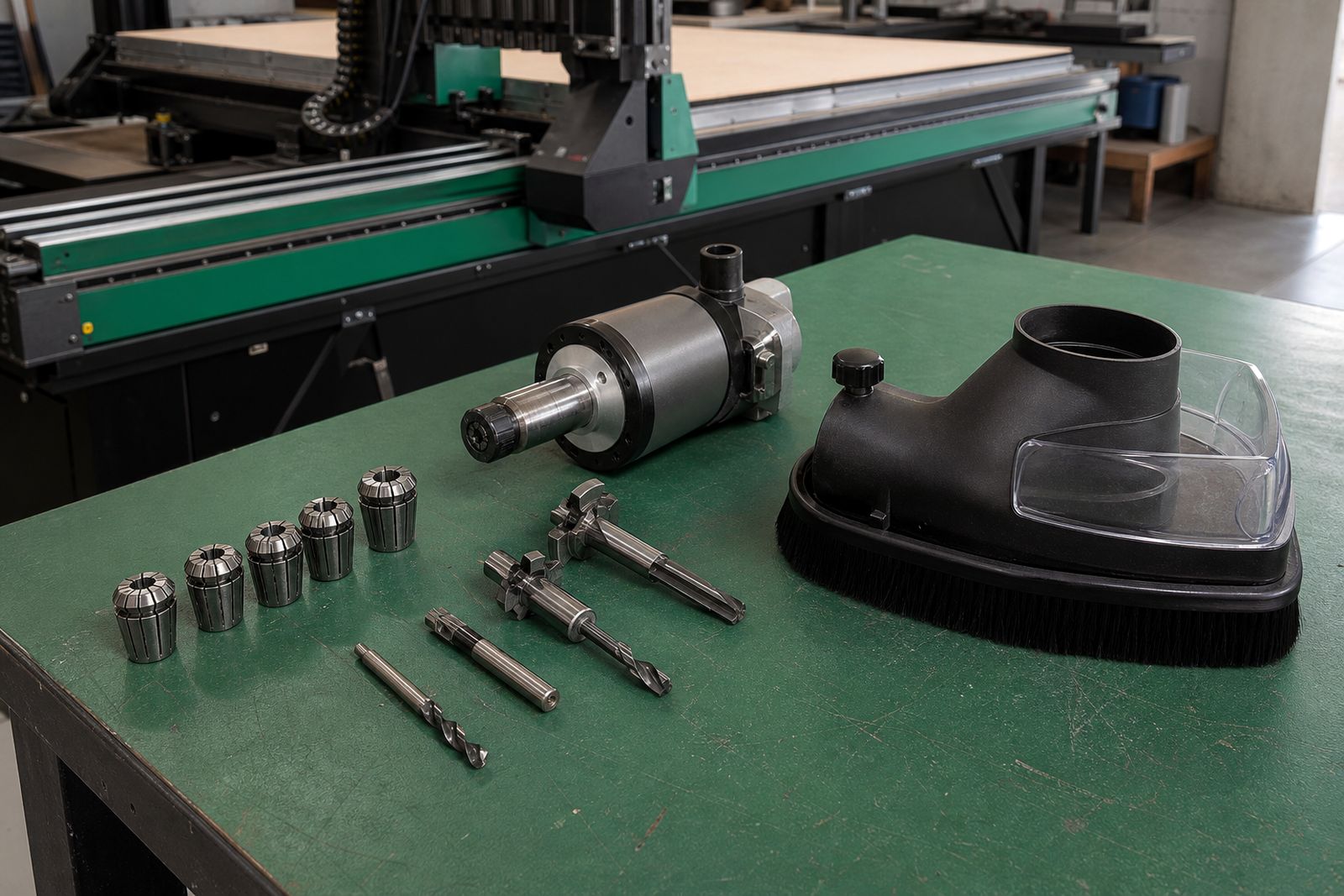
- A starter set of collets and hold-down fixtures where specified.
Dust extraction, cutters and advanced drilling or aggregate options are treated as separate inclusions because one shop may need a very different mix from the next. That keeps the published line honest.
Reading the rows without missing the costly bits
When you compare rows in the table, read left to right and look at bed size first, then spindle power, then whether the machine is a manual tool-change or automatic tool-change layout. On cabinet parts, the jump in price is often driven less by a few extra millimetres per minute and more by hold-down, loading convenience and reduced stoppages.
- A 1 220 x 2 440 mm bed suits single-sheet nesting and is the usual starting point.
- A 1 500 x 3 000 mm bed gives more room for oversize panels and jig work.
- Servo drive pricing sits above stepper drive pricing, and motion quality and acceleration improve.
- Automatic tool change adds cost, though it cuts set-up interruption on mixed jobs.
- Drill banks, pop-up pins and heavier vacuum zoning change the total quickly.
A taller gantry can look attractive on paper, but for day-to-day shopfitting board work it may not add value. The better comparison is whether the row suits the parts you nest most often and the shift length you run.
Extras most shopfitters add
Very few panel shops buy only the base router. The common add-ons are there to cut wasted handling and to improve finish on laminated boards. Vacuum, tooling and dust extraction are separate line items on many quotes because shops differ so much in board density, cutter sizes and workshop layout.
- Vacuum bed zoning and matching pump capacity.
- Compression cutters for melamine and clean top and bottom edges.
- Straight cutters for roughing MDF and chipboard.
- Dust extraction sized for router hood volume and duct length.
- Registration stops or pop-up pins for repeated board loading.
- Tool length setting options for shops that swap cutters often.
If you are pricing a router for a new fit-out line, it helps to compare the machine row with the vacuum page, tooling page and dust extraction page so the total working package is visible from the start.
Turning a list price into a written quote
The published figure is the anchor price for a known machine configuration. A written quote is where bed size, spindle choice, vacuum level, extraction and any drilling or automatic tool-change requirement are tied to your actual production. That matters when the machine is going into a cabinet workshop in Pinetown, a joinery in the Midlands or a coastal factory where fine dust handling and corrosion exposure need proper thought.
To move from the list to a bank-ready quote, send the board sizes you cut most, the materials, your expected sheet volume and the options you need through our contact form. We then set out the machine line, the add-ons, and where needed a finance estimate that matches the quoted total rather than a rough verbal number.
KZN workshop conditions
In KZN, many router buyers are cutting melamine and MDF in humid coastal conditions, and that usually pushes vacuum planning higher up the list. A machine that looks well priced without enough hold-down can cost more in board movement, recuts and operator frustration than the initial saving suggests.
These rows work best as starting configurations for panel processing, with the written quote adjusted around the real production brief. We publish permanent list prices and then adjust the written quote around the real production brief.
What our CNC Router Quote customers say
Verified Google reviews
Questions we get asked
Are these routers suitable for full-sheet melamine nesting?
The 1 220 x 2 440 mm and larger rows are aimed at full-sheet panel nesting for melamine, MDF and chipboard, with vacuum and cutter choice matched to the board you run.
Does the list price include vacuum pumps and dust extraction?
Vacuum pumps, dust extraction and cutters are added to the written quote as needed on some rows, while other rows include more of the base configuration.
Can I compare a manual tool-change router with an automatic tool-change model on one quote?
A written quote can place both configurations side by side so you can weigh the higher machine price against fewer stoppages on mixed panel jobs.
Also worth a look
Tell us about the job
Send sizes, materials and where you are through our contact form, and we will come back with the practical options.
Open the contact form